Signs of a foundation problem
Foundation crack repair in Wichita
A basement crack needs context. The useful questions are which way it runs, whether one side has shifted past the other, and whether it is still moving.
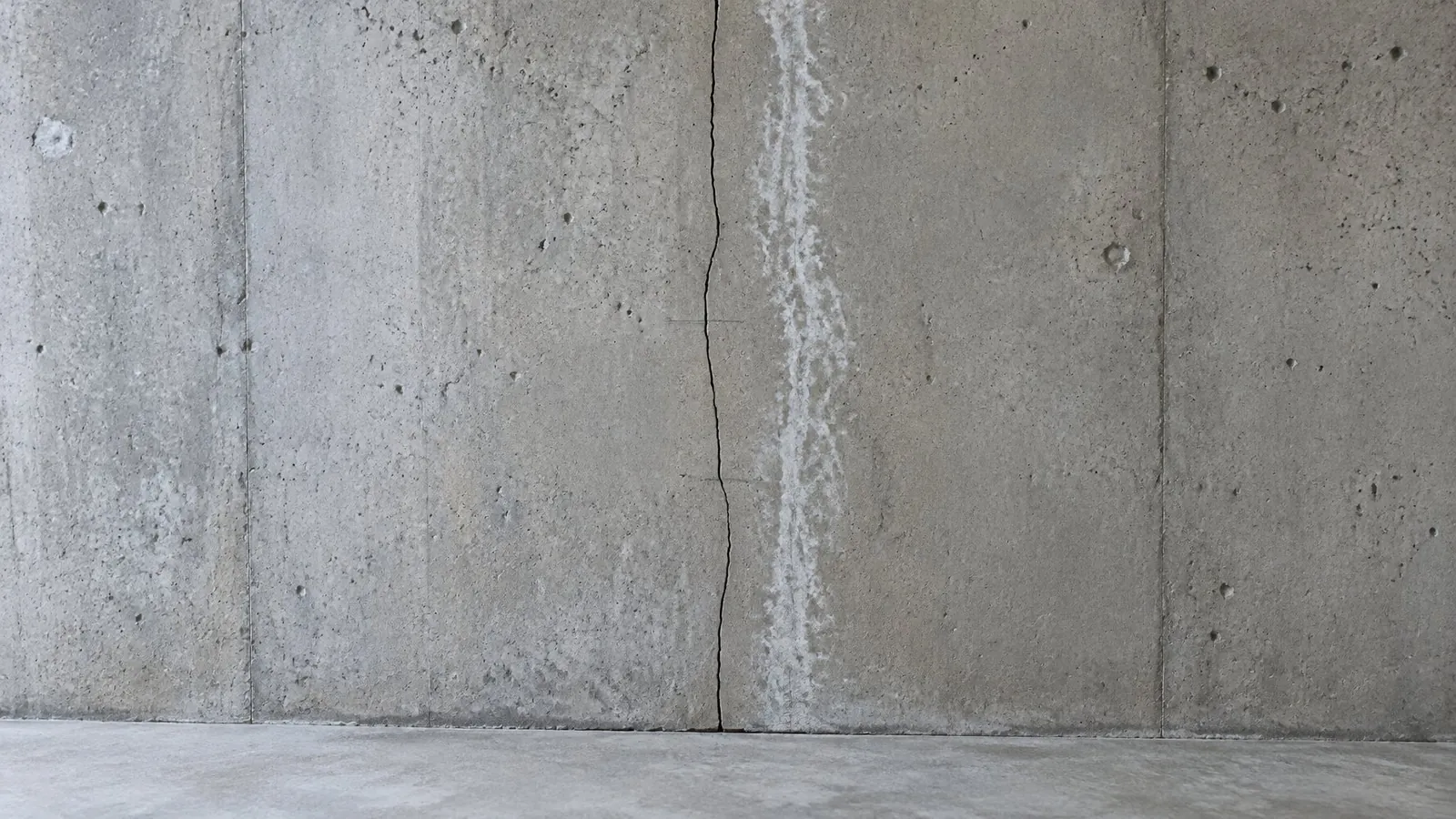
Reading a crack in a basement wall
- Vertical and hair-thin, in poured concrete. Concrete shrinks as it cures, and thin vertical cracks are a common result. Many never change.
- Diagonal, from a corner or a window. Often one end of the wall has settled more than the other. Check whether the crack is wider at the top or the bottom.
- Stair-step, in concrete block. The wall is moving along its mortar joints, either sinking at one end or being pushed from outside.
- Horizontal, part of the way up. Pressure from the soil is one possible cause. See bowing basement walls.
- In the basement floor. The floor is usually poured separately from the walls and carries little of the house. Cracks in it are common. One side standing higher than the other, or a floor heaving upward, is worth showing to someone.
Three things to measure before you call
Width. The edge of a bank card is under a millimetre; a pencil lead is about two.
Offset. Lay a straight edge across the crack and see whether one side stands proud of the other.
Change. Draw a pencil line across each end of the crack and date it. If the crack grows past the line you will know, and so will the company.
How cracks are repaired
A crack that has stopped moving in a poured concrete wall is often sealed by injection. Epoxy bonds the two sides back together. Polyurethane foam fills the crack and stays flexible, which suits a crack that leaks. Steel staples or carbon-fibre strips across the crack are sometimes added to hold it.
None of these deals with the reason the wall cracked. If the wall is still settling or still being pushed, that has to be dealt with first, with piers or wall bracing, or the sealed crack will open again.
When a crack is another trade's job
If water comes through a crack but nothing is moving, that is a leak, and sealing basements against water is a separate trade from structural repair. A foundation repair company will tell you if what you have is a matter for a waterproofer.
A crack that follows a drain line, or appears beside a wet patch in dry weather, may come from a leaking pipe under the slab. A plumber should test for that first.
Questions people ask
Is a hairline crack in a poured basement wall a structural problem?
Often it is not, but width alone cannot settle the question. A thin vertical crack that has not changed in years and shows no offset is a common result of concrete curing. One that is widening, has shifted sideways or lets soil through is a different matter. An inspection at the house is how you find out which you have.
Why does white powder form along the crack?
The powder is mineral salt left behind when moisture passes through concrete and evaporates. It shows that water has been moving through the wall at that spot. It says nothing about how far the wall has moved.
Does a repaired crack have to be mentioned when I sell?
Keep the paperwork either way. The guide to buying or selling a house with a foundation problem covers what Kansas law asks of agents and what buyers want to see.
Ready to have it looked at?
Talk to a foundation repair company near Wichita
Call and describe what you are seeing. You will speak with an independent local company that can arrange to inspect the house and give you its findings and its price.
Foundation repair for houses
Basement walls, settling, cracks, crawl spaces and sloping floors in Wichita and nearby towns.
Call (316) 555-0119Calls may be recorded. See the referral disclosure and privacy policy.