Signs of a foundation problem
Sloping, sagging or bouncy floors
Three different complaints, three different places to look. Which one you have decides who should come out and what they check first.
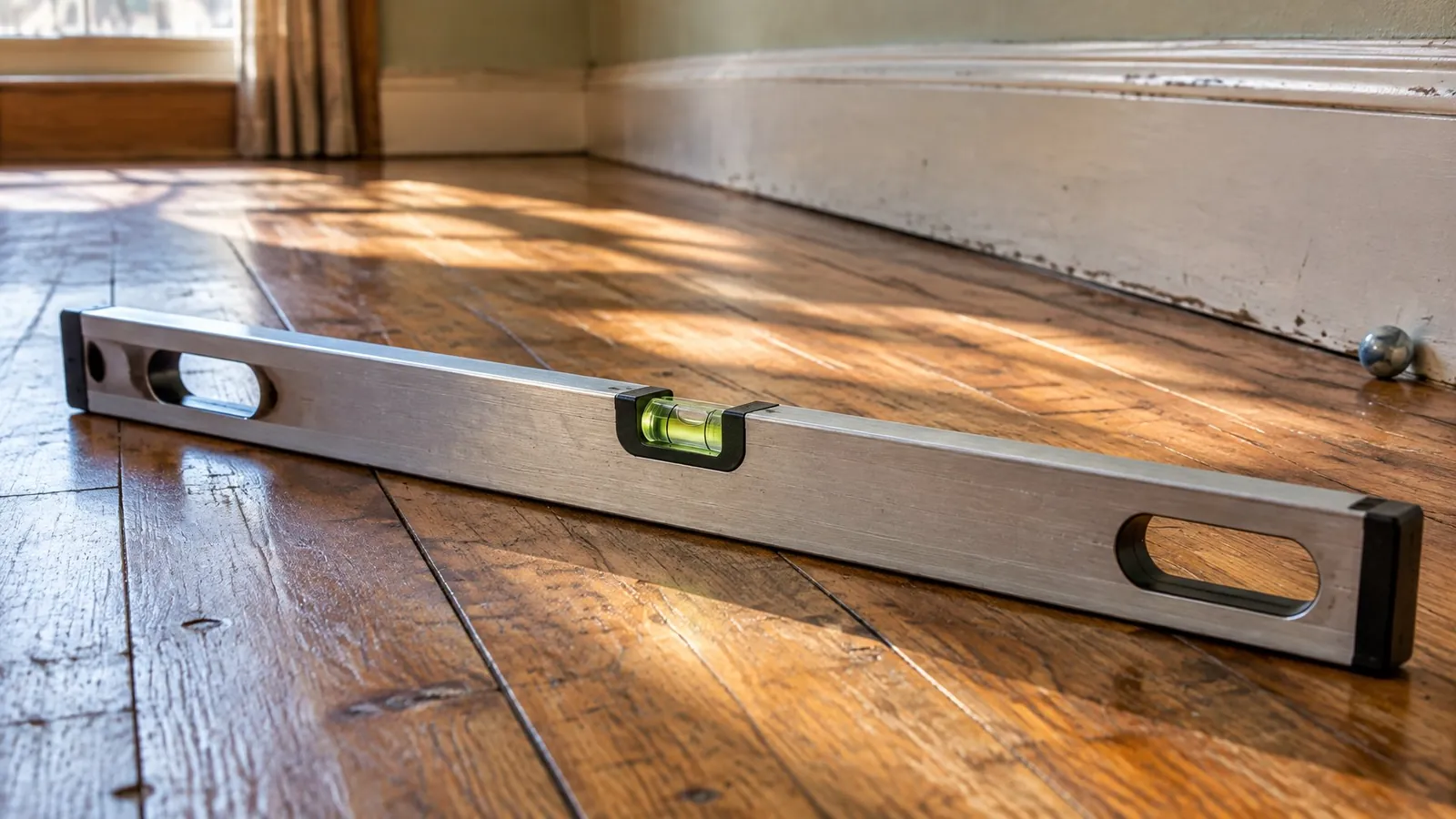
Slope, sag and bounce are not the same
A slope runs one way across a room, usually toward an outside wall. That points at the perimeter: the footing under that wall has gone down, or the middle of the house has come up.
A sag is a dip between two higher sides, often along the centre of the house. It points at whatever holds up the middle: a beam, its posts and the pads under them.
A bounce is a floor that flexes when you walk on it but sits level. That is framing, such as joists that are long for their size, and is seldom a foundation matter.
A check you can do today
Set a marble or a golf ball on bare floor in several rooms and note which way it rolls. Lay a long level across doorways. In a basement house, go downstairs and look at the steel posts and the main beam. Is a post leaning, rusted through at the base, or standing on a cracked patch of slab? Is there a gap between the top of a post and the beam, or a stack of wooden shims filling one?
Write down what you see. None of it is a diagnosis, and all of it helps the person who inspects.
What a company looks for under the floor
In a house with a basement, they follow the load down: floor, joists, beam, post, footing. A post footing that was poured small, or onto fill, can sink while the outside walls stay put.
In a crawl space house they look at each pier and test the wood for moisture and rot; that has its own page. On a slab, a slope across the whole house means the slab itself has tilted, and the question becomes what the soil under one edge is doing.
What repair might involve
For a sag in the middle, the usual proposals are new or additional steel posts on properly sized footings and, if the beam has taken a permanent bend, jacking it back in small steps over time. For a slope toward an outside wall, piers under that wall are the common answer. For bounce, a carpenter can add blocking, double up joists or put in a mid-span support.
A floor that has sloped for decades may be brought only part of the way back, because plaster, trim and plumbing have settled along with it. Ask how much lift the company expects and what could crack on the way up.
Questions people ask
How much floor slope is normal in an older Wichita house?
No single number fits every house. Plenty of older houses have floors a little out of level that have been stable for decades. What matters more is whether the slope is growing, and whether cracks and sticking doors are appearing along with it.
Can I add a jack post myself?
The adjustable posts sold in hardware stores are generally meant as temporary support. A permanent post needs a footing sized for the load, and repair work to the structure of a house in Wichita needs a permit from MABCD. Have the cause checked before anything is jacked. See permits.
Ready to have it looked at?
Talk to a foundation repair company near Wichita
Call and describe what you are seeing. You will speak with an independent local company that can arrange to inspect the house and give you its findings and its price.
Foundation repair for houses
Basement walls, settling, cracks, crawl spaces and sloping floors in Wichita and nearby towns.
Call (316) 555-0119Calls may be recorded. See the referral disclosure and privacy policy.